September, 2025
Hellmann’s vs. Stanley: Real Empathy or Opportunism?
Branding
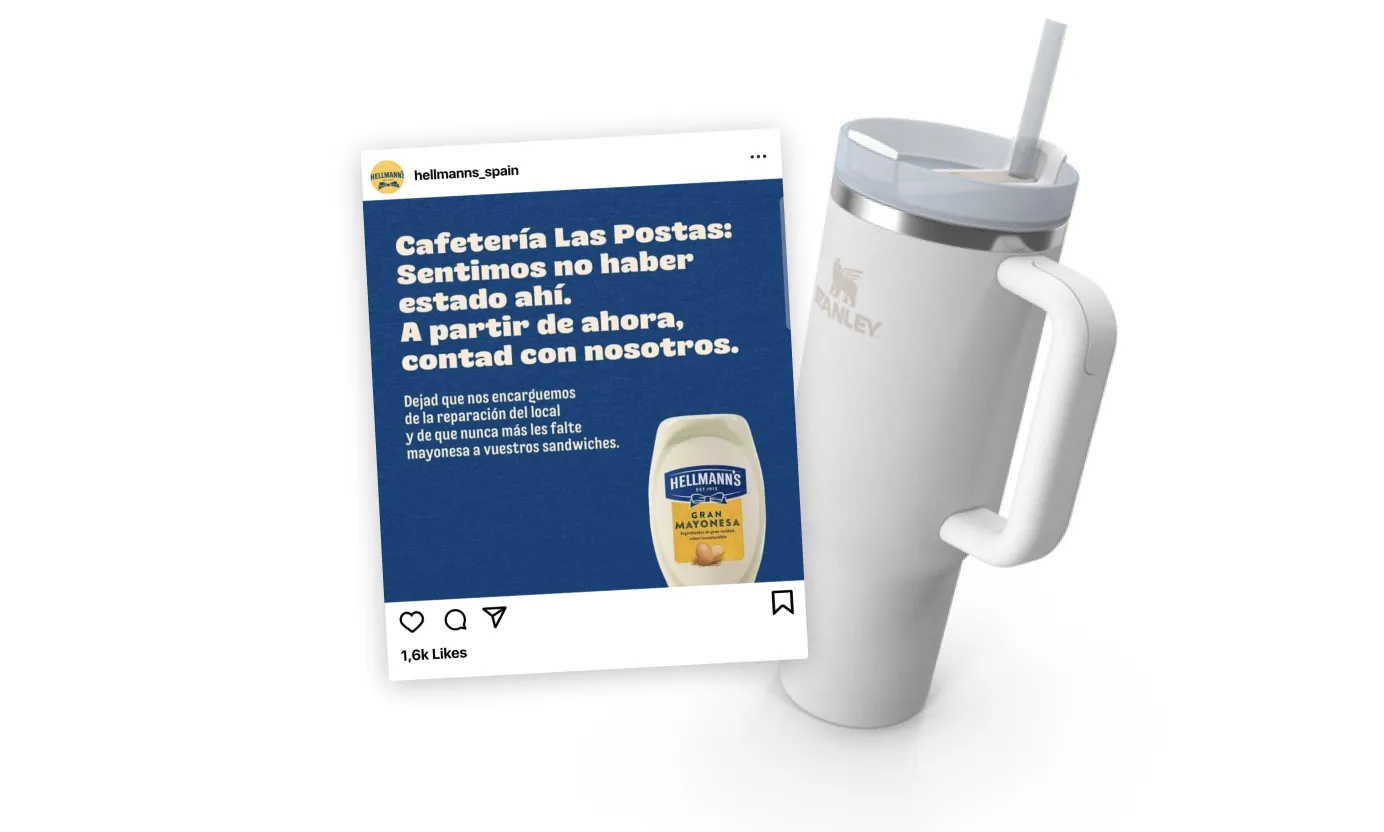
In August 2025, a bar in Seville was set on fire by a customer upset that there was no mayonnaise for his sandwich. The damages exceeded €20,000 and the business was left devastated. The story quickly spread across media and social platforms due to its absurdity and tragedy.
A few days later, Hellmann’s stepped in, announcing they would pay for the bar’s full repair and promising that mayo would never be missing there again. Headlines exploded with a mix of humor and seriousness: a mayonnaise brand covering the cost of arson damage. But the big question remains: was this empathy or marketing?
The comparison with Stanley is unavoidable. In 2023, a TikTok video showed a car burned to ashes —except for a Stanley cup inside, still holding ice. The clip went viral. Within 24 hours, Stanley’s president posted a video: they would replace the cup and buy the owner a new car. The move was celebrated globally as authentic, empathetic, and perfectly timed.
Hellmann’s case is trickier. The context is violent, not accidental. Their reaction came days later, not hours. While paying for the repairs is significant, it risks being seen as opportunistic —capitalizing on a tragedy for attention.
After more than ten years helping brands shape their narratives, I find these contrasts invaluable. The same type of gesture can be celebrated or questioned depending on timing, context, and tone.
What we can learn from this case:
Empathy works when it feels genuine.
Timing is everything: Stanley acted in 24 hours; Hellmann’s took days.
Not every trending topic is an opportunity.
Context matters: tragedy requires sensitivity.
Consistency counts: one-off gestures can fade without follow-up.
The debate remains open: was Hellmann’s truly empathetic, or did they ride the viral wave to gain attention?
MY RECENT STORIES
Product Design
June, 2025